
)
1st edition. May 18th and 19th, 2023
International conference on academic literacies in multilingual contexts: Bridging research evidence and classroom practice
Dates
May 18th and 19th, 2023
Academic language is an important part of the languages of schooling (Beacco et al, 2016), and, apart from including the whole variety of languages used at school, languages of schooling also include languages across the curriculum. As each discipline constructs knowledge in subject-specific ways, academic language is dependent on disciplinary conventions (Shanahan & Shanahan, 2008). Disciplines shape the linguistic features required for knowledge construction and communication, as some linguistic features are prevalent in certain disciplines. However, in classrooms all over the world, learners are engaged in learning content in a language that they do not speak at home. The language of instruction for many students in multilingual education contexts is not their L1 or a dominant language and, consequently, the integration of disciplinary content and language(s) is a matter to be considered. Therefore in some cases, literacy may be uncompleted.
Against this backdrop, the aim at this conference is to bring new research evidence on the development of academic literacies in multilingual contexts. It is therefore crucial to achieve a research-based understanding of the knowledge base(s) needed by language teachers as well as their processes of becoming and continuously developing as teachers. Teachers and researchers from diverse cultural, linguistic and professional backgrounds are therefore invited to participate in this meeting.
Instructions for authors
Important dates:
- Submission of proposals: November 1 - 30, 2022
- Extended deadline for abstracts submission: December 16, 2022
- Notification of acceptance/refusal: January 31, 2023
- Early bird registration deadline: February 28, 2023
- Regular registration starts: March 1, 2023
Funding
This congress is part to the project The potential of subject specific literacies to foster deeper learning in Secondary Education within the framework of Pluriliteracies Teaching for Learning (ALPHA) (PID2019-111655RA-I00), which has received funding from the Ministry of Science, Innovation and Universityes of the Spanish government.
Plenary speakers
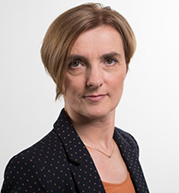
Christiane Dalton Puffer
Exploring the potential of cognitive discourse functions
Universität Wien
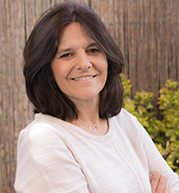
Ana Llinares
Academic literacies and CLIL: from reesarch to practice
Universidad Autónoma de Madrid
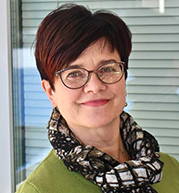
Tarja Nikula
Subject-specific knowledge building: bridging theory and classroom practice
University of Jyväskylä
Maiatzak 18 / May 18th
8:15 - ...
Erregistroa / Registration
9:00 - 9:30
Irekiera / Opening (Auditorium)
9:30 - 10:30
Hizlari nagusia / Plenary session (Auditorium)
Ana Llinares (Universidad Autonoma de Madrid) - Academic literacies and CLIL: from reesarch to practice
*Aldibereko itzulpena ingelesa > euskara / Simultaneous translation English > Basque
10:30 - 11:30
Panel 1a (Room 309 Gela)
- Does the discipline influence the questions asked by EMI teachers? - Aintzane Doiz, David Lasagabaster (Euskal Herriko Unibertsitatea)
Panel 1b (Room 310 Gela)
- Assessing multiliteracy practices in diverse EAL classrooms - Anna Krulatz, Eliane Lorenz, Eivind Torgersen (Norwegian University of Science and Technology)
11:30 - 12:00
Atsedena / Break
12:00 - 13:30
Panel 2a (Room 309 Gela)
- How do content teachers conceptualize CLIL? Implications for teacher education - Mª Paz Azparren-Legarre (Public University of Navarra)
- The impact of intensity of CLIL programs on students’ communicative appropriateness in writing - Irene Guzmán-Alcón (Universitat Jaume I)
- SPECIAL observation protocol: a bridge from classroom practice to research and back - Vicky Gil (Universidad de Zaragoza)
Panel 2b (Room 310 Gela)
- Virtual exchange using multimodal videos as a means of promoting transversal skills in Japanese university students - Martin Parsons (Hannan University)
- Assessment practices and awareness of multilingualism on first-year bioscience courses at a Spanish university - Sarah Khan (Universitat de Vic-Universitat Central de Catalunya)
- An exploration of material development and teaching practices in English for medical purposes courses: Two practitioners’ critical review - Yavuz Kurt, Talip Gülle (Yeditepe University)
13:30 - 15:00
Bazkaria / Lunch
15:00 - 16:00
Panel 3a (Room 309 Gela)
- Supporting Multilingual Students’ Academic and Disciplinary Literacies in Higher Education - Umit Boz (University of Calgary)
- EME students’ views of their learning: context-specific implications for biliteracy development - Irene Soriano Flórez (Universidad Complutense de Madrid)
Panel 3b (Room 310 Gela)
- A systematic Review on Multiliteracies and Multilingualism in Adult Migrants - Javier Ávila-Lopez, Fernando Rubio-Alcalá (Universidad de Cordoba)
16:00 - 17:30
Mahai-ingurua / Roundtable (Auditorium)
Gelako esperientziak ezagutuz etorkizuneko erronkak identifikatzen
*Aldibereko itzulpena euskara > ingelesa / Simultaneous translation Basque > English
18:30 - ...
Egitarau soziala / Social event
Maiatzak 19 / May 19th
9:00 - 10:00
Hizlari nagusia / Plenary session (Auditorium)
Christiane Dalton-Puffer (Universität Wien) - Exploring the potential of cognitive discourse functions
*Aldibereko itzulpena ingelesa > euskara / Simultaneous translation English > Basque
10:00 - 11:30
Panel 4a (Room 309 Gela)
- Ikasle eleaniztunen hizkuntza kontzientzia eta curriculumeko hizkuntzen garapena - Oihana Leonet, Eider Saragueta, Alaitz Santos (Euskal Herriko Unibertsitatea)
- Translinguismo multimodala INEBIn: inklusioa bultzatzen duen kasu ikerketa Euskal Herrian - Maite Amondarain-Garrido (Universidad Internacional de La Rioja)
- Nola sortu Hizkuntza eta Hezkuntza Proiektuak Unibertsitatearen eta eskolaren artean, euskara-frantsesa murgiltze bikoitza ardatz? Zenbait tentsio eta aukera - Eunate Arebiotorre, Arantza Ozaeta (Mondragon Unibertsitatea)
*Aldibereko itzulpena euskara > ingelesa / Simultaneous translation Basque > English
Panel 4b (Room 310 Gela)
- Learning science through the CDF of “comparing” - Pilar Gerns (University of Navarra)
- How Young Learners Verbalise their Thoughts: Cognitive Discourse - Mary Griffith (Universidad de Málaga)
- Definitions in Geography CLIL textbooks: some implications for teaching and learning - María Ángeles Martín del Pozo, Débora Rascón Estébanez (Universidad de Valladolid)
11:30 - 12:15
Atsedena / Break
12:15 - 13:15
Panel 5a (Room 309 Gela)
- Investigating potential causes of reading shortcomings as well as the impact of reading interventions among academically vulnerable students at a multilingual South African university - Nandi Weder (University of Pretoria)
- Exploring EXINTEX as an analyzing tool in EMI classes in Turkey - Sebnem Yalcin, Yasemin Bayyurt, Hale Isik Güler (Bogazici University & Middle East Technical University)
Panel 5b (Room 310 Gela)
- Using students’ multilingual resources to build academic literacy - Tuija Lehtonen, Nina Reiman, Johanna Saario (University of Jyväskylä)
- The use of a digital genre in English for Tourism: Teaching challenges and opportunities in 21st-century Higher Education - Balbina Moncada-Comas (Universitat Politècnica de Catalunya), Irati Diert-Boté (Universitat de Lleida)
- Receptive Language Gains through EMI Courses at Higher Education: Using Plurilingual Assessment Tools - Josep M. Cots, Thais Mena-Orduña, Àngels Llanes (Universitat de Lleida)
13:15 - 14:15
Hizlari nagusia / Plenary session (Auditorium)
Tarja Nikula (University of Jyväskylä) - Subject-specific knowledge building: bridging theory and classroom practice
*Aldibereko itzulpena ingelesa > euskara / Simultaneous translation English > Basque
14:45
Itxiera / Closing remarks (Auditorium)
Call for papers
We invite researchers and practitioners to present research findings in emerging areas of academic literacies research. Individual papers or poster proposals are accepted in this call for papers. The time allotted for individual papers is 20 minutes, followed by 10 minutes for discussion. Proposals should contain original unpublished research that is not yet accessible to the scientific community. We look forward to receiving submissions on these and other emerging topics such as the following:
- Academic literacies in secondary and higher education
- Academic literacies in multilingual contexts
- Pluriliteracies approach for deeper learning
- Teacher training and academic literacies
- Classroom practices
- Integration of language and content
- Multilingual and intercultural competence
- Language(s) across the curriculum
- Cognitive Discourse Functions
Each participant can submit a maximum of 2 proposals: either both co-authored proposals or one individual and one co-authored proposal.
All submitted abstract proposals should be:
- As follows:
- Title
- Author(s) (name, affiliation, email)
- Abstract (including topic presentation, objective, methodology, results and conclusion)
- 3 to 5 keywords
- References
- Written in English or Basque.
- No longer than 300 words (not including bibliography).
- Sent to the conference email: academic.literacies@mondragon.edu.
We welcome contributions from new and experienced practitioners and researchers on any line of research mentioned above. Abstracts will be accepted in English or Basque. We look forward to receiving your abstracts in due course and anticipate an exciting exchange and debate. Meanwhile, we would be grateful if you could circulate this call within your network.
Please feel free to contact academic.literacies@mondragon.edu if you have any questions about the conference.
Venue
BBF - BILBAO BERRIKUNTZA FAKTORIA
- Address: Uribitarte Kalea, 6. 48001 Bibao, Bizkaia
Travelling to Bilbao
The Conference will take place in the BBF campus of Mondragon Unibertsitatea in Bilbao. The building is located in the center of Bilbao and is easily accessed walking from the train station or using the city buses or metros.
By train
The nearest train station is Abando-Indalecio Prieto, which connects Bilbao with other cities in Spain. Connections can be checked at Renfe’s website. The train station is just a five minute walk away from the conference site.
Bu bus
If you come by bus to Bilbao, your bus will probably leave you in the Bus Station (Intermodal), next to San Mamés (Bilbao’s football stadium). From there, there are several options to get to BBF.
- Metro: is located in the Bus Station, you would need to take L1 or L2 (to Basauri) and get off in Abando (3 stops from San Mamés/Intermodal).
- Bus: you can use the city bus (Bilbobus, the red buses) to get near to BBF: 77, 76, 72, 38
- Tram: you can take the tram to Atxuri in San Mamés, next to the Intermodal bus station, and get off in Abando (7 tram stops).
Flights
The easiest flight option is flying to Loiu, Bilbao’s airport, located to 12 km from the center. From the airport, you can get to Moyua (which is 5 minutes walking to BBF) or to the Bus Station (Intermodal) by bus by taking the 3247 line (3€). It runs every 20 minutes and takes approximately other 20 minutes to get to Bilbao.
Organizing committee
- Eneko Anton
- Roberto Arias
- Unai Carmona
- Eneritz Garro
- Ainara Imaz
- Nagore Ipiña
- Amaia Lersundi